
Business Support & Advisory
How to Measure Whether Business Training Changed Anything
Define a work output, establish a baseline and check behaviour and results after the training has been applied.
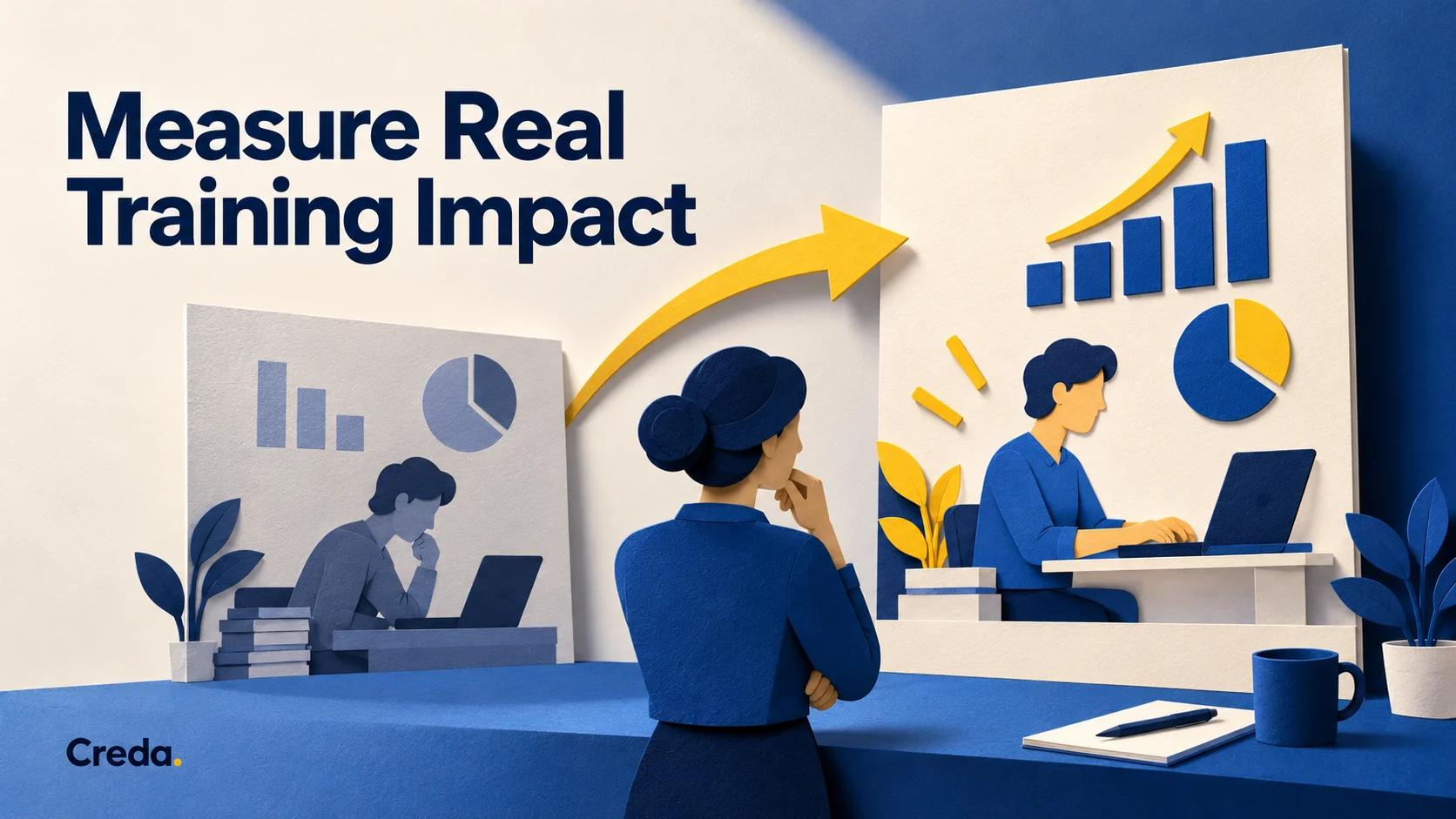
Measure training by a change people can demonstrate in real work. Before the session, agree what participants should do differently and what evidence would show it happened. Collect a short baseline from a recent task or work sample.
Use three checks after the session
Check that participants can explain the method in their own words. Ask them to apply it in a real or realistic task, then review the result against the baseline. Separate what participants learned from business results that can change for several reasons.
Example. A sales team attends a session on quoting. In the week before training, review a few quotes for scope clarity, timelines and payment terms. Ask participants to use the method on real enquiries, then review the next comparable set. If quotes improve, check whether fewer buyers are asking the same clarification question. Record changes in lead volume or customer mix before attributing a change in sales to the training.
Give someone ownership of the review
Set a first follow-up within the relevant work cycle. Ask supervisors what made the new method easy or difficult to apply. Provide an approved template or short practice session if staff understand the method but struggle with an existing system.
What if attendance was high and outcomes did not move? Review whether the team had time, tools and authority to apply the material. Adjust support based on what actually blocked the work.
Set a baseline to measure training outcomes
Pick one behaviour your team can demonstrate at work. If the course is about handling orders, use a behaviour like confirming quantity, delivery date and payment instructions in the customer’s message. Review a small set of examples from before training and use the same checklist after training.
| When | What to collect |
|---|---|
| Before the session | Three to five typical work samples and the outcome you want to improve. |
| In the session | A sample task participants finish with feedback. |
| After the next work cycle | Comparable samples and notes on what helped or blocked staff. |
| At the follow-up | The decision to keep the new method, revise it or provide more practice. |
Use the evidence to decide what support to add
Suppose two of ten pre-training quotes stated what was included and when payment was due. After training, seven of ten comparable quotes meet both checks. That shows adoption in the samples reviewed. Discuss the three misses with the people involved. If staff can write the right terms in practice but the quote form hides the fields, fix the form or template. Recheck the next set before interpreting any change in sales, which may reflect seasonality, customer mix or pricing.
Find practical training with CredaBiz
Find practical training with CredaBiz. Browse CredaBiz Events for programmes that match the skill your team needs. Take a sample task and a baseline measure into the discussion so you can ask how participants will apply the learning and get feedback. For a practical example, read the CredaBiz Learn to Learn recap.
Join the conversation
Share a brief thought or question about this article.
No comments yet. Be the first to share a thought.
Suggested for you

Business Support & Advisory
How to Use a Learning Library to Finish Real Work
Choose a current business task, use the relevant lessons, produce something usable and review whether it improved your work.
20 November 2026

Business Support & Advisory
How to Prepare Your Team for Leadership and Staff Training
Prepare your team for leadership and staff training with a real work problem, a practice task and a plan for checking whether the behaviour changes.
10 November 2026

Business Support & Advisory
How to Turn a Business Advisory Session Into an Action Plan
Prepare for a business advisory session with a clear decision, recent evidence and a practical action plan with an owner, measure and follow-up date.
5 November 2026