
Business growth and strategy
How to Start Exporting from Nigeria: A Practical Beginner’s Guide
Learn how to plan an export business in Nigeria, choose a product and market, prepare your company, validate buyers and organise your first shipment.
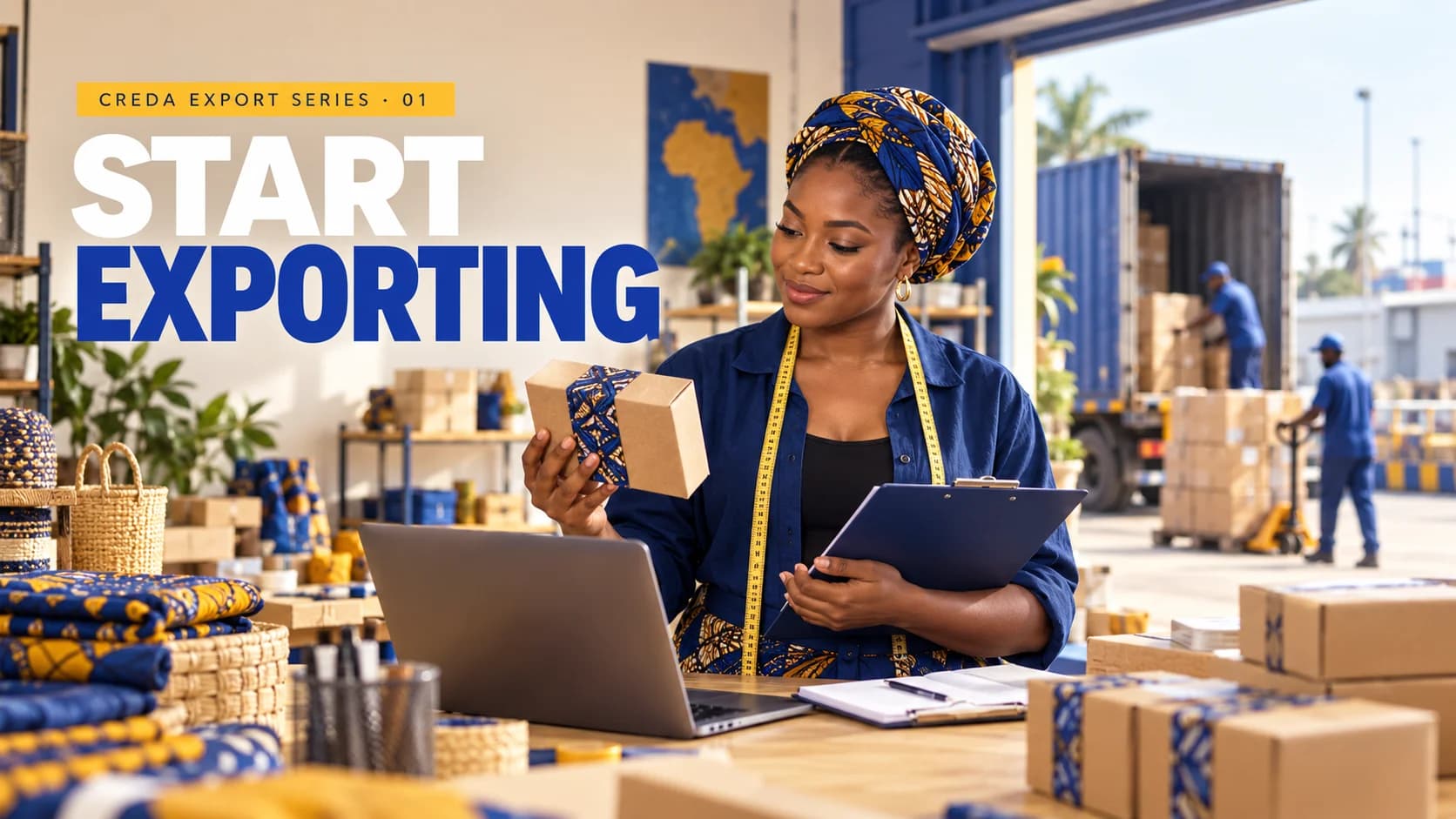
CredaBiz Export Series · Part 1 of 6. Sources checked 30 October 2026. Requirements depend on your product, destination and shipment.
You have access to a product in Nigeria. Someone overseas wants it. The difference between those two facts and a successful export business is everything that happens in between: quality control, documentation, pricing, payment and delivery.
An international enquiry can feel like a breakthrough. It can also expose an unprepared business to a loss it cannot afford. Before buying stock, work out whether you can supply the right product, meet the destination’s requirements and still make money after the full cost of the transaction.
What does it take to start exporting from Nigeria?
Start with one defined product, one target market and a buyer whose identity and requirements you can verify. Establish your business records, confirm the relevant exporter registration and product permissions, calculate the transaction’s costs, agree payment and delivery terms, then organise a controlled first shipment.
The official Nigeria Trade Information Portal export procedure connects business and tax registration, exporter registration, product classification, banking, applicable permits, customs clearance and shipment. The precise route varies with the consignment.
Decide what role your business will play
You do not have to own a farm or factory to participate in an export supply chain. But you do need a clear role.
| Model | What you actually do | Question to answer before starting |
|---|---|---|
| Producer-exporter | Grow or manufacture what you sell abroad | Can production meet the buyer’s specifications repeatedly? |
| Merchant exporter | Purchase, prepare and export goods from suppliers | Can you control quality, traceability and working capital? |
| Sourcing intermediary | Introduce or coordinate suppliers and buyers for an agreed fee | Who is the exporter of record, who gets paid, and what does your contract cover? |
| Consumer brand | Sell packaged products through importers, distributors or retail channels | Who handles destination compliance, inventory and customer returns? |
Calling yourself an agent does not remove responsibilities if your business is the named seller or exporter. Write down who owns the goods, issues the invoice, carries the risk and handles claims.
Begin with demand, not a warehouse full of stock
An available product is not yet a validated opportunity. A buyer might need sesame with a particular cleaning standard, ginger in a specific form, or cashew kernels in a grade your supplier does not produce.
Create a product brief before making a large purchase. Include the product’s commercial name, processing stage, likely HS classification, source, available quantity, sample method, packaging options and lead time. Identify which claims are already supported and which need testing.
Next, interview potential buyers. Ask what they purchase, what makes them reject suppliers, their trial-order size and what documents they expect. If you cannot get a useful response, improve the offer before increasing inventory.
Prepare the business behind the product
Use consistent business details across company records, invoices, bank accounts and contracts. A foreign buyer should not have to guess whether the website, certificate and bank beneficiary belong to the same organisation.
Check that your registration records reflect the real owners, directors and contact details. Keep statutory obligations on a dated calendar. If details have changed, correct the underlying record rather than editing the certificate image.
CredaBiz’s business registration and post-incorporation support can help with the company foundation. Export-specific approvals remain subject to the relevant authorities.
Build a small, usable export team
For a first transaction, identify the people responsible for sourcing, quality checks, banking, documentation and freight. One employee may coordinate several areas, but responsibility should be explicit.
Ask prospective service providers which products and routes they handle, what their quote includes, which documents they need and how they handle delays. A vague promise to “clear everything” is less useful than a written scope with named charges.
Have a backup supplier and a backup communication contact. Export commitments should not depend on one person’s phone being available.
Find out how much money the transaction needs
Your funding requirement includes more than goods and freight. Budget for samples, testing, packaging, inland transport, storage, documentation, banking, inspections where applicable and an allowance for delays or rejection.
Map the cash cycle. When must you pay suppliers? When is freight due? When can you access the buyer’s payment? A transaction with an attractive margin may still fail if your cash runs out before collection.
Do not treat an enquiry, unsigned purchase order or payment screenshot as money available to spend.
Use a first-shipment gate
Before committing stock, be able to answer these questions:
Is this exact product permitted to leave Nigeria and enter the destination?
Has the buyer approved a representative sample and written specification?
Are permissions and tests linked to the actual product and batch?
Are responsibilities for freight, insurance, clearance and destination charges clear?
Has the payment arrangement been checked with the processing bank?
Can the business absorb a delay without abandoning the transaction?
A small pilot is useful only when it follows the correct route. A sample or courier parcel is not automatically exempt from plant-health, food or customs controls.
A practical first-month plan
Use the first week to shortlist products and assess supply. In the second, compare markets and interview buyers. In the third, validate specifications, costs and documentation. In the fourth, decide whether the evidence supports a pilot.
This is a planning sequence, not a promise that certification, buyer approval or shipment will finish within a month. Some products need a longer preparation period.
Frequently asked questions
Can I export without owning a farm?
Yes, a merchant model is possible. Your supplier agreement, quality checks and traceability become especially important because you are selling goods produced by someone else.
Must I start with a full container?
No universal minimum applies to every export business. The buyer’s quantity requirement, shipping route and fixed compliance costs determine whether a smaller shipment makes commercial sense.
Is there one export licence that covers everything?
No. Exporter registration is different from permission for a particular product or shipment. Part 2 explains that distinction.
Put structure behind your export ambition
If your next step is forming the business, organising company records or building a realistic operating plan, explore CredaBiz Business Support & Advisory. A useful readiness review should identify the gaps before you commit money to goods.
Read next: Part 2, Export Licence in Nigeria: NEPC Registration, Costs and Documents.
Primary source: Nigeria Trade Information Portal — Export Procedures. Checked 30 October 2026.
Follow the six-part export series
The next five instalments cover NEPC registration, commodities, markets and buyers, documents and shipping, and pricing and payment. They publish daily through 4 November 2026.
Join the conversation
Share a brief thought or question about this article.
No comments yet. Be the first to share a thought.
Suggested for you
Business growth and strategy
How Can I Separate Business Money From Personal Spending?
Use a consistent system for business receipts, expenses and owner transactions. A dedicated account helps, but the records must still explain withdrawals and transfers. Start with accurate categorisation rather than trying to make the statements look artificially busy.
8 November 2026

Business growth and strategy
What Should My Business Website Include to Convert Enquiries?
A business website should answer who the service is for, what it includes, what happens next and how to enquire. Make forms mobile-friendly, confirm the response route and measure completed enquiries.
6 November 2026
Business growth and strategy
Export Pricing and Payments: Protecting Your First International Sale
Calculate export costs, understand delivery terms, compare payment risks and prepare a safer first international sale from Nigeria.
4 November 2026