
Funding and grants
Youth Ecopreneur Programme 2026/27: Eligibility and How to Apply
Young founders building green businesses or restoring land can apply to the Youth Ecopreneur Programme by 22 November.
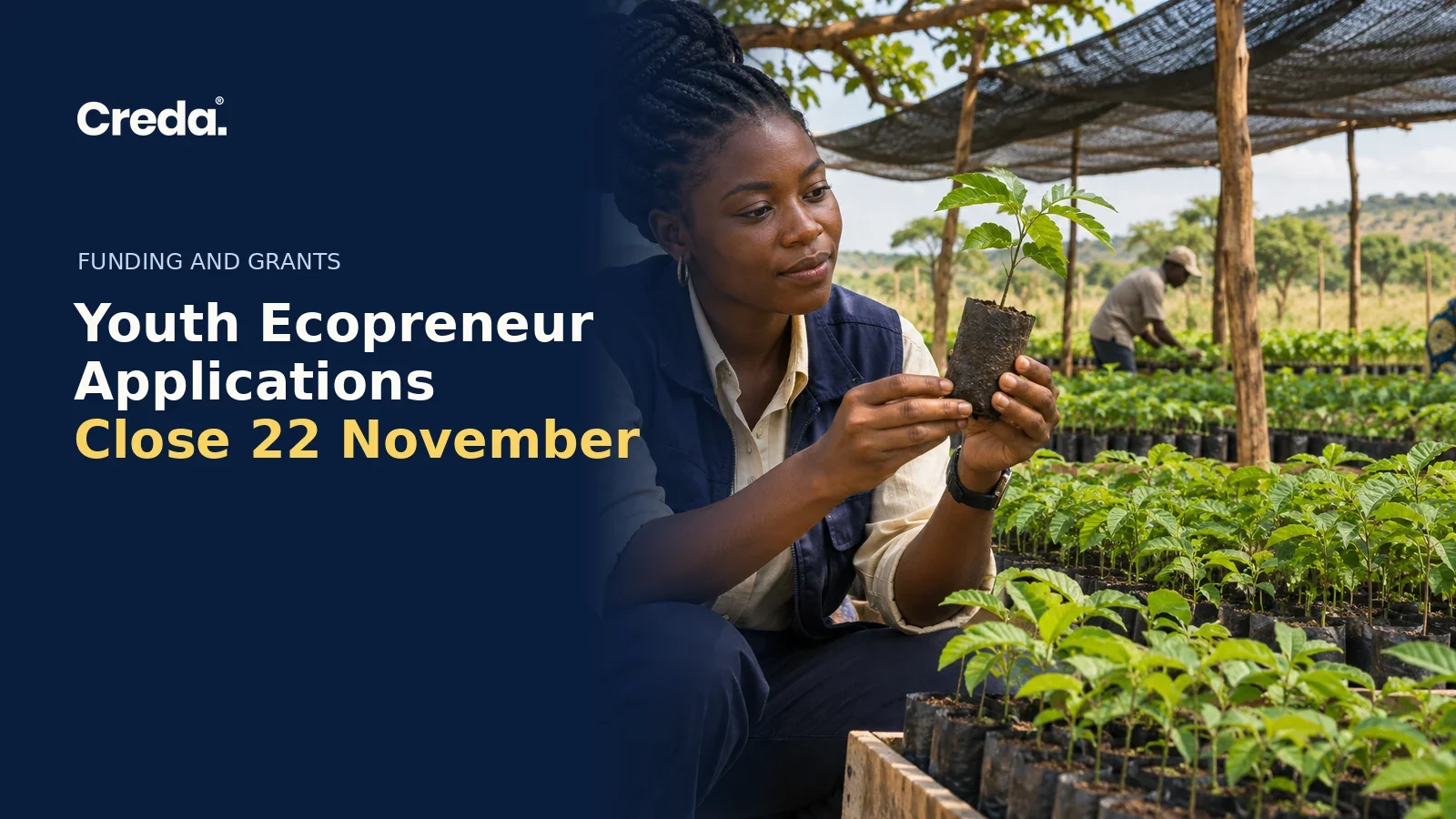
If you are building a business that solves an environmental problem, the Youth Ecopreneur Programme is worth understanding. The 2026/27 programme, organised through the International Trade Centre and the UN Convention to Combat Desertification's G20 Global Land Initiative, is designed to help young entrepreneurs develop businesses that contribute to a greener and more sustainable economy.
The opportunity is not simply for people who have an idea about protecting the environment. It is intended for entrepreneurs who can explain the problem they are addressing, show how their solution works and demonstrate how the business can grow.
The application deadline stated by the organisers is 22 November 2026. That is a short window, so anyone considering applying should read the official form and eligibility requirements immediately.
What is the Youth Ecopreneur Programme?
The Youth Ecopreneur Programme supports young entrepreneurs developing businesses in green sectors and land restoration. It combines business development support with an opportunity to compete for awards.
The programme has two application tracks. The Regular Track is intended for early-stage businesses that need to strengthen their foundations and business models. The Fast Track is designed for more established ventures with stronger revenue, market traction and the capacity to scale.
The programme also publicises a US$10,000 prize stage and a separate US$100,000 equity-free funding pool for eligible land-restoration businesses. These are distinct award opportunities. Applicants should read the official terms carefully rather than assume every selected participant receives either amount.
Who should consider applying?
The organiser states that applicants must be 35 or younger. The programme is relevant to entrepreneurs whose businesses address environmental or land-related challenges.
Examples may include:
Businesses converting agricultural waste into useful products.
Enterprises developing affordable solutions for soil improvement or land restoration.
Companies reducing waste through reuse, recycling or better production methods.
Businesses helping farmers adapt to climate-related challenges.
Ventures offering products or services that reduce pollution or improve resource efficiency.
The fact that a business describes itself as environmentally friendly is not enough. The application should explain the actual environmental problem and how the product or service addresses it.
Which application track is right for your business?
Regular Track: early-stage businesses
This route is for businesses that are still strengthening their foundations. You may have developed a product, tested it with a few customers or started making sales, but still need to improve your business model, operations and readiness for growth.
The programme describes a 10-week bootcamp before participants progress to the accelerator. If your business is still refining its pricing, customer base or delivery model, this track may be more appropriate.
Fast Track: established and growth-stage businesses
This route is intended for businesses with stronger evidence of traction. The application form refers to consistent revenue, market traction and operational capacity to scale. Selected businesses enter the accelerator directly, although some masterclasses may still be mandatory.
Do not choose the Fast Track simply because it sounds more advanced. Choose the route that reflects the actual stage of your business. If you cannot support your revenue and traction claims with records, the Regular Track may be a more credible choice.
What documents should you prepare?
The official application form asks applicants to have the following ready:
Passport: Check that your details are clear and that the document is valid.
Business registration certificate: Prepare the relevant registration document for the business.
Pitch deck: Explain the problem, solution, customers, business model, traction, impact and growth plan.
The application is in English, and the organiser indicates that the programme will be conducted in English. Applicants should be comfortable explaining their business and participating in the programme.
Beyond the listed documents, it is useful to prepare evidence that supports your claims. This may include sales records, customer feedback, photographs of a product or project, pilot results, partnerships and a simple explanation of how the business measures environmental impact.
How to make your application stronger
A good application should help the reviewer understand the business without having to guess.
Start with a specific problem. Avoid broad statements such as "climate change is affecting Africa." Explain the particular problem your customers experience. For example, farmers in a defined location may lose income because soil quality is declining or because agricultural waste is not being used productively.
Explain the solution in everyday language. What exactly do you sell or provide? Who uses it? How does it work? What makes it useful or different?
Show evidence, not just promises. If you say your product reduces waste, explain how much waste has been diverted in a pilot. If you say it improves farmers' income, show how you measured the change. If you are still at an early stage, be honest about what you have tested and what remains to be proven.
Explain how the business earns money. Environmental impact and commercial sustainability should support each other. State who pays, how much they pay, how frequently they buy and what it costs you to deliver the solution.
Make your growth plan realistic. Rather than saying you want to expand across Africa, identify the next market, the resources required and the milestones you intend to achieve.
Common mistakes to avoid
Applying under a track that does not match the business stage.
Making environmental claims without evidence.
Using a pitch deck that describes the idea but not the business model.
Reporting projected revenue as though it were money already earned.
Submitting documents with inconsistent business details.
Waiting until the final hours to complete the form.
Assuming that selection for the programme guarantees a cash award.
How to apply
Use the official application form and review the questions before submitting. The organiser provides the application tracks and required documents on the form.
The stated deadline is 22 November 2026. Confirm the deadline and any updated instructions on the official form before submission.
Frequently asked questions
Who can apply?
The organiser states that applicants must be 35 or younger and meet the requirements of the selected track.
Does the programme accept an idea that has not started selling?
The Regular Track is intended for early-stage businesses. Review the application questions to confirm whether your current level of development meets the requirements.
What is the difference between the two tracks?
The Regular Track supports early-stage businesses through a bootcamp and accelerator pathway. The Fast Track is for more established ventures with consistent revenue and stronger market traction.
Does every participant receive US$100,000?
No. The programme describes separate awards, including a US$100,000 equity-free pool for eligible land-restoration businesses. It should not be treated as a guaranteed payment to every applicant.
What should I do if I am not ready this year?
Use the application requirements as a development checklist. Strengthen your product, document customer results, improve your business records and monitor the organisers for future opportunities.
Final word
A strong green business is not defined only by the problem it wants to solve. It is defined by its ability to deliver a solution that people need, measure the impact and remain financially sustainable.
If your business is working in this space, take the time to present it clearly. Explain what you have achieved, what you still need to prove and how the programme can help you move to the next stage.
Check your funding documents before you submit
Use the organiser’s application guide first. Write down the track, deadline and evidence it requests. Compare those requirements with your current records and put the missing items in order of importance. If you can only finish one task today, start with the eligibility or supporting document that could prevent submission.
Use the CredaBiz Funding Readiness Assessment to identify gaps in your ownership, financial and business records. Select grant as your funding goal and use the report to decide which evidence to organise. Submit the programme application through the organiser’s official route.
Application details are based on the organiser's published information available on 19 November 2026. Always confirm the latest requirements before applying.
Join the conversation
Share a brief thought or question about this article.
No comments yet. Be the first to share a thought.
Suggested for you
Funding and grants
UNDP’s timbuktoo AgriTech Launchpad Accepts Startups on a Rolling Basis
UNDP’s Ghana-hosted AgriTech Launchpad offers rolling incubation for African startups building technology for agriculture.
28 November 2026

Funding and grants
How to Record a One-Minute Grant Pitch Video
Build a one-minute grant pitch around the customer problem, evidence, use of funds and a credible outcome.
28 November 2026
Funding and grants
Sèmè City Opens a $7,000 NEXT IMPACT Ideation Window for Benin Residents
Sèmè City’s official call lists 15 December 2026 for aspiring entrepreneurs who reside in Benin and have an eligible idea.
27 November 2026