
Company structures
Limited Company vs Limited Liability Partnership
Compare a Nigerian company limited by shares with an LLP: ownership, management, partner requirements and the questions to resolve before choosing a structure.
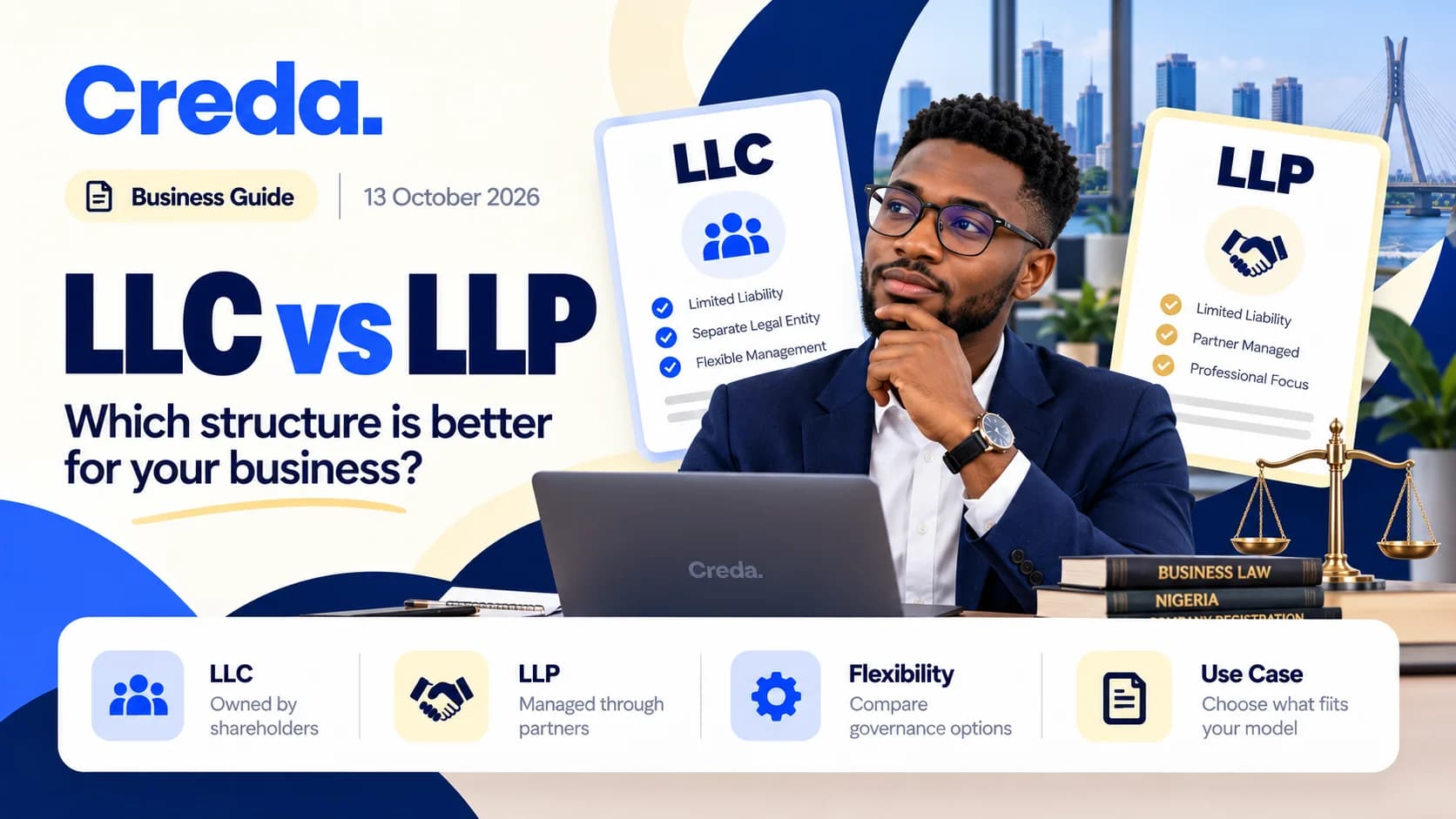
A Nigerian company limited by shares and a limited liability partnership are distinct legal structures. A company has shareholders and directors; an LLP has partners and designated partners. Choose by how the business will be owned, financed and managed.
What does LTD mean in this comparison?
Founders sometimes use LLC informally when referring to a limited company. For this article, the comparison is a private company limited by shares, commonly using LTD in its name, against a registered LLP.
Do not confuse an LLP with a business name used by ordinary partners or with a limited partnership. Similar abbreviations do not create identical legal rights.
How does ownership work?
A company divides ownership through shares. An LLP's arrangements centre on its partners and partnership agreement. Both require attention to the rights, obligations and records behind the registration.
Before choosing, write down contributions, decision rights, profit arrangements, exits and what happens if a founder stops working in the business. A friendly initial relationship is not a substitute for clear terms.
What does CAC require for an LLP?
CAC's operations checklist specifies at least two partners and two designated partners, with at least one designated partner resident in Nigeria. The checklist also addresses consent, identity particulars and a partnership agreement.
Designated-partner responsibilities should be understood before anyone accepts the role. Ask how ongoing filings and record keeping will be assigned.
Which structure fits an investment plan?
If the plan depends on issuing shares to outside investors, discuss that requirement explicitly when assessing a company. If the business will be organised around a continuing group of partners, examine the LLP agreement and governance options.
Neither observation is a universal recommendation. Ask the intended investor, professional regulator or major customer about any structural requirements before filing. Tax treatment needs its own review and should not be guessed from the entity name.
Compare the work after registration
Request an explanation of formation costs, recurring filings, accounting, changes in ownership and exit procedures for each option. A cheaper initial application can be poor value if the structure immediately needs changing.
Limited liability should not be read as immunity from personal guarantees, fraud or individual wrongdoing. Obtain advice about the actual arrangements and risks.
Frequently asked questions
Is an LLP the same as a limited company?
No. They have different ownership and governance arrangements under CAMA.
Can I choose purely on the name?
The name should follow the structure. First decide the rights and responsibilities the business needs.
Does one option always pay less tax?
Do not assume that. Assess the activities, owners and current tax rules with appropriate advice.
Make the decision before the filing
Ask Creda for a business structure review with your ownership, financing and management plans. If a company is preferred, use our company requirements checklist for preparation.
Sources
Reviewed on 28 October 2026.
Join the conversation
Share a brief thought or question about this article.
No comments yet. Be the first to share a thought.
Suggested for you

Company structures
How Many Directors Does a Nigerian Company Need?
A qualifying small company can have one director; other companies generally need at least two. Understand the distinction between a sole shareholder and a sole director before incorporating.
13 October 2026

Company structures
What Is Share Capital in a Nigerian Company?
Understand issued share capital, share allocation and ownership in a Nigerian company, and why the figure is different from cash in the bank or the market value of the business.
13 October 2026
Company structures
Business Name vs Limited Company in Nigeria: Which Should You Register?
Choose between a registered business name and a limited company by considering liability, ownership, investors and continuing compliance, rather than the certificate alone.
13 October 2026