Company structures
What Is Share Capital in a Nigerian Company?
Understand issued share capital, share allocation and ownership in a Nigerian company, and why the figure is different from cash in the bank or the market value of the business.

Share capital is part of a company's legal ownership structure. It is different from the cash in its bank account, its revenue and its market valuation. Understanding those differences helps founders avoid making a random choice during incorporation.
What are shares and issued share capital?
A company limited by shares divides its capital into shares with a nominal value. Issued shares have been allocated to shareholders. The share records show who holds them and the rights attached to the relevant class.
CAMA sets minimum issued-capital requirements, while some activities or ownership arrangements can require more. Check the current rule applicable to your company rather than copying another company's figure.
A simple ownership example
Imagine a company with 100,000 ordinary shares of the same class. If Founder A holds 70,000 and Founder B holds 30,000, their holdings represent 70% and 30% of that issued class.
This is an illustration, not a recommended capital figure. Voting, dividends and other rights also depend on the share terms and governing documents. A percentage alone does not describe every right a shareholder may have.
Share capital is not a bank balance
If the company spends money on equipment, that does not mean its issued shares disappear. Likewise, a large share-capital figure does not prove that the company currently holds that amount in cash.
Keep share records, payment obligations, accounting records and bank statements distinct. Ask what has been issued, what is paid or unpaid, and what evidence supports the position.
Share capital is not business valuation
An investor may negotiate a price based on expected performance, assets, risks and commercial terms. That price should not be confused with the nominal value printed in the share structure.
Before accepting investment, model the proposed allocation and dilution. An offer involving new shares can change existing ownership percentages even when founders do not sell their own shares.
Decisions to settle before incorporation
Agree the number and classes of shares, the proposed holders, the allocation and the rights intended. Check whether the business activity requires a higher capital level and how official charges will be calculated.
Record the agreement and review it alongside the company's constitutional documents. Do not allow an application assistant to make an important ownership decision without the founders understanding it.
Frequently asked questions
Does share capital show how much profit a company makes?
No. Profit is an accounting outcome; share capital concerns the company's capital and ownership records.
Can shareholders have different rights?
Different classes and arrangements can carry different rights. Review the actual terms rather than assuming all shares are identical.
Can the capital change after registration?
Changes require the appropriate corporate decisions and filings. Ask about the procedure, costs and effects before proceeding.
Build an allocation you can explain
Ask Creda for a business structure review with your proposed ownership and investment plans. The limited company checklist covers the wider preparation.
Sources
Reviewed on 28 October 2026.
Join the conversation
Share a brief thought or question about this article.
No comments yet. Be the first to share a thought.
Suggested for you
Company structures
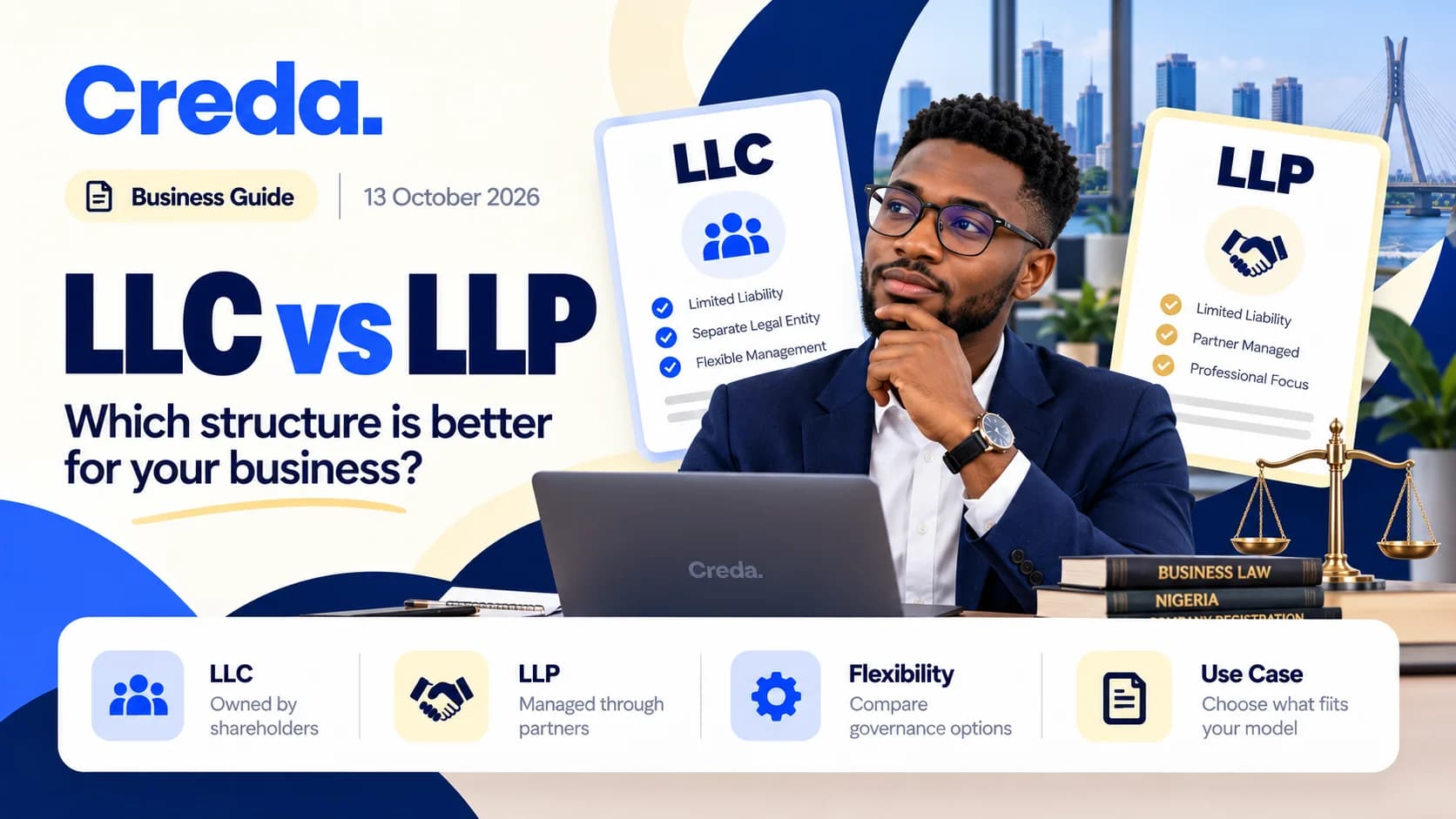
Limited Company vs Limited Liability Partnership
Compare a Nigerian company limited by shares with an LLP: ownership, management, partner requirements and the questions to resolve before choosing a structure.
13 October 2026
Company structures
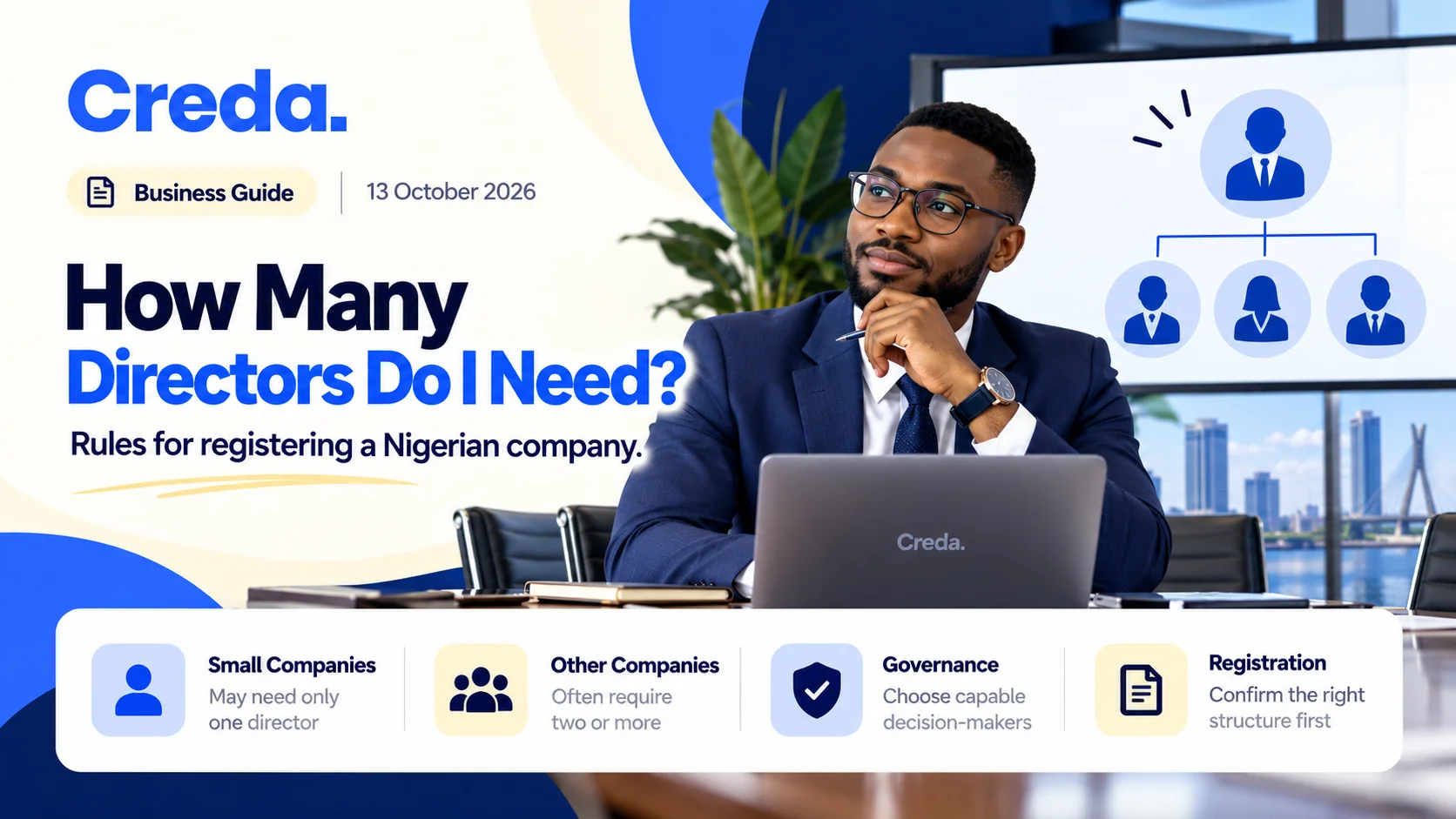
How Many Directors Does a Nigerian Company Need?
A qualifying small company can have one director; other companies generally need at least two. Understand the distinction between a sole shareholder and a sole director before incorporating.
13 October 2026
Company structures
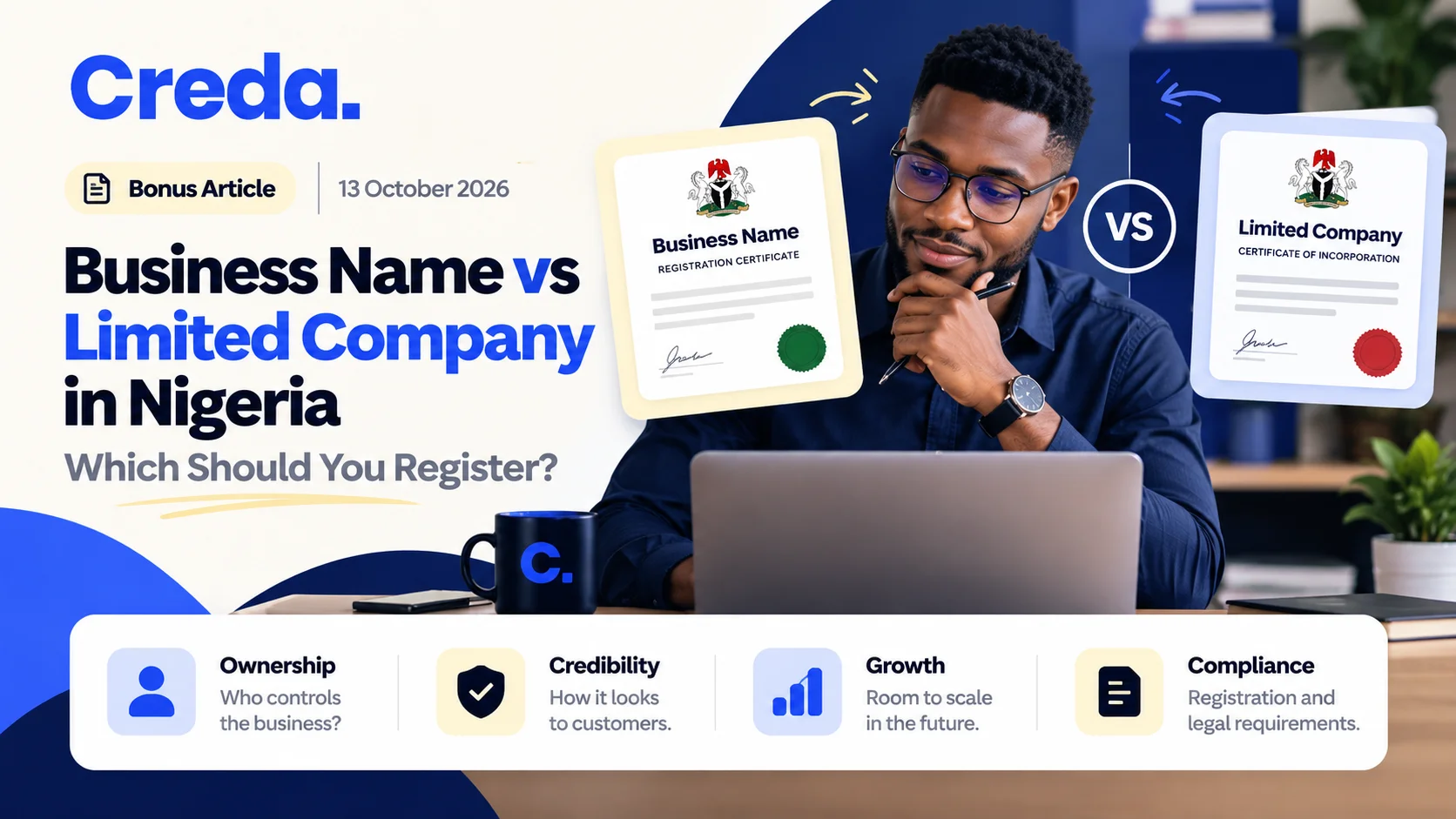
Business Name vs Limited Company in Nigeria: Which Should You Register?
Choose between a registered business name and a limited company by considering liability, ownership, investors and continuing compliance, rather than the certificate alone.
13 October 2026