Trademark and brand protection
Does CAC Registration Protect Your Brand Name? Trademarks Explained
Does CAC registration protect your brand name? Understand business names, trademark searches and class selection before investing more in your Nigerian brand.
Think about everything you have already put into your business name.
The conversations before you chose it. The first logo. The labels you paid to print. The customer who remembered the name and came back.
When the CAC certificate arrives, it can feel as though that name is finally yours in every sense.
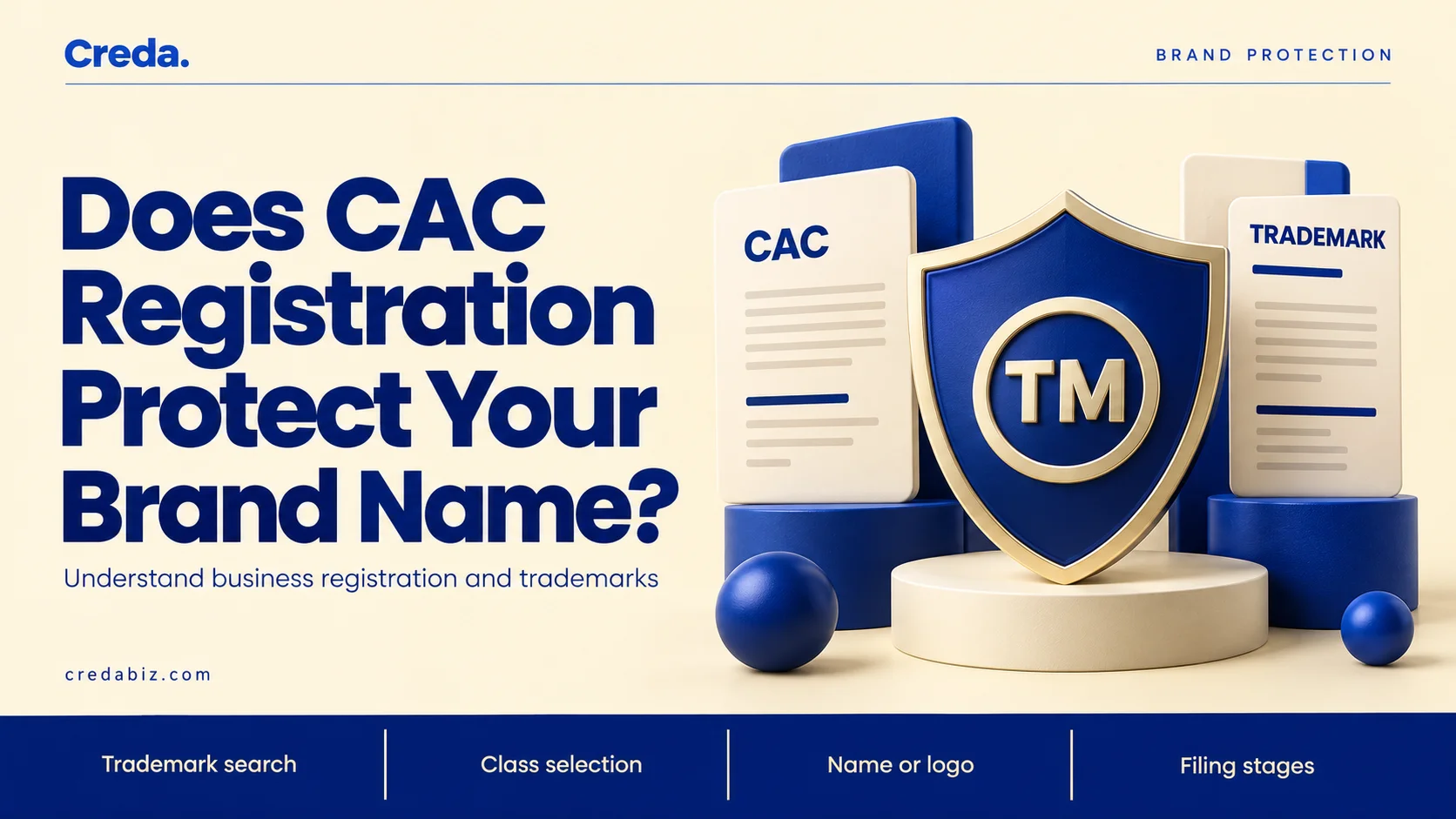
CAC registration does not automatically give you a registered trademark. A business-name registration and a trademark registration address different questions. If a name, logo, or product identity matters to your customers, it is worth examining trademark protection separately before investing more in it.
What is the difference between CAC registration and a trademark?
CAC handles the registration of business names and other business structures. Trademark applications are handled through Nigeria's trademark registry.
A trademark identifies the commercial source of particular goods or services. Depending on the application, it may concern a distinctive name, word, logo, or other eligible mark.
The distinction matters when you make decisions. A CAC availability result answers a registry question; it should not be treated as a completed trademark-clearance exercise. Likewise, a trademark application is not the incorporation of a company.
Keep the two records separate, even when the wording on them is similar.
Why does this matter before you spend more on branding?
Imagine discovering a naming conflict after paying for a large batch of packaging. There may be a practical cost even before anyone considers a legal dispute: revised artwork, replacement labels, and changed web pages and explanations to customers.
That is an illustration, not a claim about a particular Creda client. It shows why an early search can be a useful business decision.
Before committing to a name, make a list of where it will appear: products, invoices, a storefront, a website, an app, or a training program. Then decide which identity you need assessed and who should own it.
If you are still choosing your business structure, Creda's business name versus limited company guide addresses that separate decision.
Start with a trademark search.
An internet search can help you notice existing brands. It does not establish that a mark is available for registration.
Ask for a proper assessment of the proposed mark against the relevant registry records, including potentially conflicting marks. Explain the goods or services you actually sell. A search based on an incomplete description may answer the wrong question.
Do this before making a large branding commitment where possible. If you are already trading, gather the records of your existing use and seek advice on the actual position rather than assuming you must immediately abandon the name.
A search informs a decision. It is not a guarantee of registration or an assurance that nobody can object.
What are trademark classes?
Trademark protection is connected to specified goods or services. Nigeria uses the Nice classification system, and the registry's guidance calls for a separate application for each class sought.
For a practical planning example, a business might sell physical products and also run paid training. Do not assume that one broadly described application addresses every part of that business. Ask which classes and descriptions fit the actual activities.
Before agreeing to a quotation, write down:
What you sell now.
What you plan to launch next.
The name or logo customers use to recognize each offer.
The goods or services proposed for each application.
What is included in the quoted work.
Do not choose classes simply because another business used them. Their activities, applications, and protections may be different.
Should you register the name, the logo, or both?
Start with what you want assessed. Is it the wording of the brand, its visual design, or a combination?
A logo can change as a business grows. The trading name might remain, while the products or services expand. Explain those plans when discussing the filing strategy so the application is based on more than the image file you happen to have today.
Ask what each proposed application would cover and what it would leave outside its scope. There is no useful universal answer without seeing the mark and understanding the business.
What does the trademark process involve?
The registry describes a process involving filing, examination, and, where accepted, publication in the Trademark Journal. Publication opens a two-month opposition period. Registration follows the applicable process if objections do not prevent it.
That is why a filing acknowledgement, an acceptance notice, and a registration certificate should not be treated as interchangeable documents.
When you receive an update, ask which stage has been reached, what evidence supports it, and what happens next. Avoid promising customers or partners that an application is fully registered before the process has reached that stage.
What if another business is already using a similar name?
Do not send threats on the strength of a social media search. Preserve the relevant records and get advice before making allegations or committing to an expensive rebrand.
Nigeria's Trade Marks Act distinguishes registered-mark infringement from passing-off rights, which it preserves. Earlier use and the circumstances of the dispute can matter. Neither “I registered with CAC first” nor “I have not registered a trademark” is enough to decide a real dispute on its own.
The sensible next step is an assessment of the facts and records, not a verdict from a comment thread.
Your brand-protection preparation list
Before seeking help, collect:
The exact brand wording and current logo.
The proposed applicant or owner's details.
A clear description of the goods and services.
Relevant existing registration or application records.
Examples of how the mark is used, if already trading.
Any known similar brands or correspondence raising a concern.
Keep the dates and original files. A well-organized folder helps the adviser understand the position and identify the next decision.
Frequently asked questions
Does my CAC certificate mean my brand is trademarked?
No. Check for a separate trademark application and its actual status. A CAC certificate is not a trademark registration certificate.
Does one trademark application protect every business activity?
Do not assume so. Protection depends on the mark, specified goods or services, and the registration's scope. Discuss class selection before filing.
Does a Nigerian trademark automatically cover other countries?
Do not treat a Nigerian filing as worldwide protection. If you plan to sell abroad, ask about the countries and protection routes relevant to that expansion.
Is a logo design service the same as trademark registration?
No. Designing a visual identity and applying to register a mark are separate services. Confirm exactly what a designer's or adviser's engagement includes.
Protect the name you are asking customers to remember
You may still be a small business, but the name on your packaging already carries your effort and your customers' expectations.
Before you invest further, ask Creda about a trademark search and brand-protection support. Start with the mark, the activities, and a clear explanation of the proposed scope.
Sources
Join the conversation
Share a brief thought or question about this article.
No comments yet. Be the first to share a thought.
Suggested for you

Trademark and brand protection
Does Registering a Domain Name Protect My Brand in Nigeria?
A domain secures a web address under the registrar's terms. It does not replace CAC registration or trademark clearance. Check these separately before treating a purchased domain as proof that the brand is available for commercial use.
6 November 2026

Trademark and brand protection
How Many Trademark Classes Does My Business Need?
Trademark classes organise goods and services. Choose classes based on what the business actually offers and its credible expansion plans. A filing in one class should not be presented as blanket protection across every market.
4 November 2026
Trademark and brand protection
Should I Trademark My Business Name or My Logo First?
The useful starting point is what customers recognise and what you need to protect. A word mark and a logo representation address different branding assets. Search the proposed mark and choose the relevant goods or services before deciding filing priorities.
2 November 2026