
Company structures
Business Name vs Limited Company in Nigeria: Which Should You Register?
Choose between a registered business name and a limited company by considering liability, ownership, investors and continuing compliance, rather than the certificate alone.
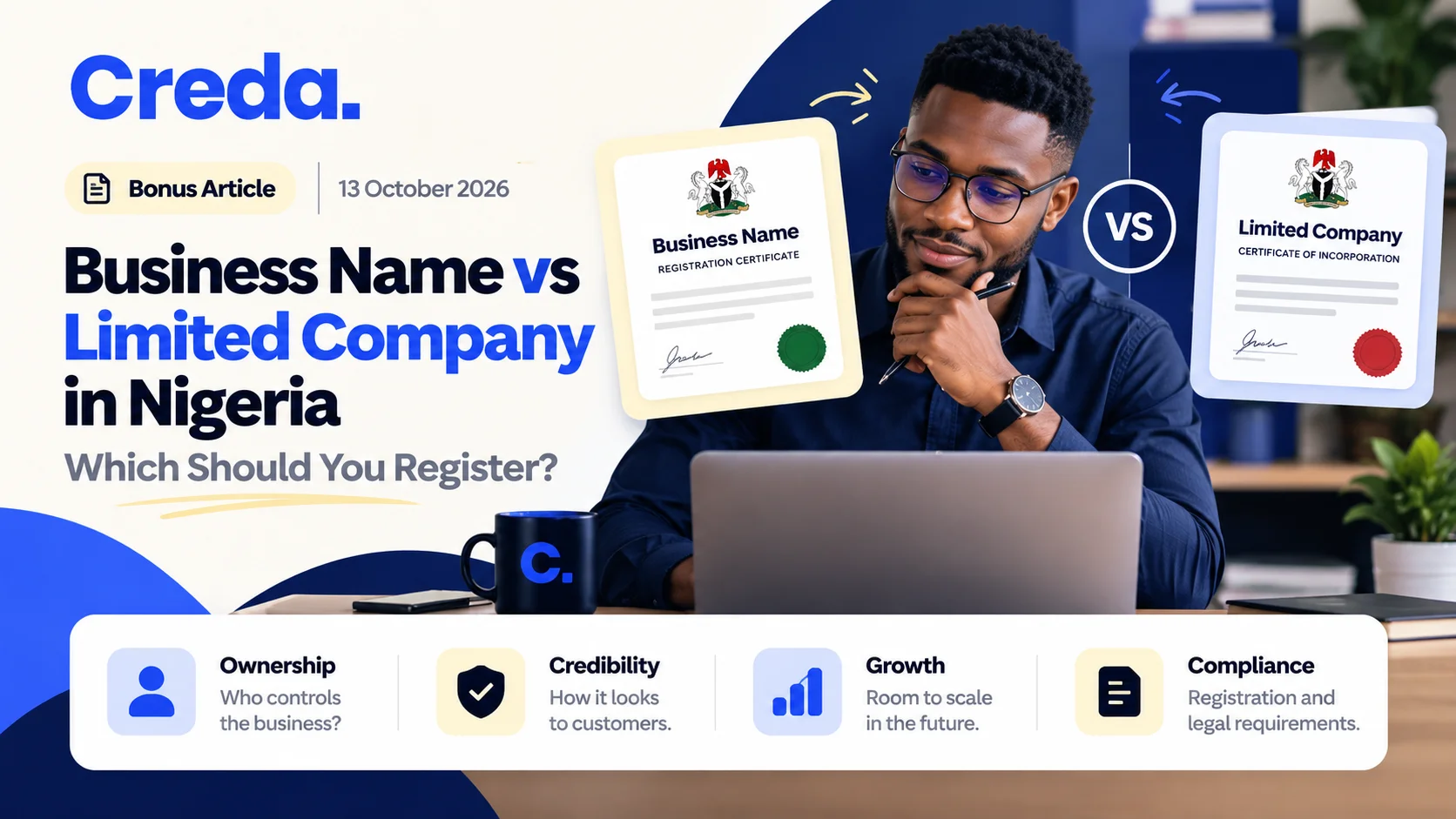
A registered business name identifies a proprietor's business, while a limited company creates a separate corporate entity. The better option depends on ownership, risk, financing and the obligations you are prepared to manage.
Start with who owns the business
A solo trader may need a registered trading name for a relatively simple operation. Founders who intend to allocate shares or bring in equity investors need to examine a company structure.
Do not use “partner” loosely. A co-founder expecting shares in a company and a proprietor sharing a trading business can have very different legal positions. Agree the intended relationship before choosing the application.
Understand the liability difference
A business name does not by itself create a separate limited-liability company. With a company limited by shares, the entity is distinct from its members, and member liability follows the applicable legal rules.
Limited liability does not eliminate every personal exposure. Guarantees, personal conduct and particular legal duties need separate attention. Ask about the actual contracts and risks rather than treating LTD as an absolute shield.
Think about the next financing decision
If you plan to offer ownership to investors, consider how shares, voting, future funding and exits will work. If your current need is a dedicated business bank account, do not assume you must incorporate a company: banks also offer business-name account routes subject to their conditions.
Read the business bank account guide for that separate preparation task.
Compare continuing work
Both structures require accurate records and applicable filings. A company brings its own governance, shareholder and officer records; a business name still has annual-return and record-update responsibilities.
Ask for the expected formation and ongoing work for your actual situation. Initial price should be considered alongside the cost of correcting an unsuitable structure later.
A decision checklist
Before deciding, answer these questions in writing:
Who owns the business now, and who may join later?
Will finance involve borrowing, equity or both?
What contracts and operational risks are expected?
Does an industry regulator prescribe a structure?
Who will handle accounting and continuing compliance?
A structure review is especially useful if the answers conflict. There is no universal rule that every small business should begin as a business name or that every ambitious founder needs a company immediately.
Frequently asked questions
Is a business name legitimate?
Yes, it is a recognised registration route. Its legal characteristics differ from those of a company.
Does an LTD guarantee investors or large contracts?
No. Counterparties assess their own requirements, and registration is only part of the evidence they may consider.
Can I move to a company later?
A transition requires planning for incorporation and the existing business's assets, contracts and records. See our restructuring guide.
Register for the business you are building
Ask Creda for business registration support with a clear description of the owners, activities and financing plan. Resolve the structural decision before submitting the application.
Sources
Reviewed on 28 October 2026.
Join the conversation
Share a brief thought or question about this article.
No comments yet. Be the first to share a thought.
Suggested for you
Company structures
Limited Company vs Limited Liability Partnership
Compare a Nigerian company limited by shares with an LLP: ownership, management, partner requirements and the questions to resolve before choosing a structure.
13 October 2026

Company structures
How Many Directors Does a Nigerian Company Need?
A qualifying small company can have one director; other companies generally need at least two. Understand the distinction between a sole shareholder and a sole director before incorporating.
13 October 2026

Company structures
What Is Share Capital in a Nigerian Company?
Understand issued share capital, share allocation and ownership in a Nigerian company, and why the figure is different from cash in the bank or the market value of the business.
13 October 2026