Company structures
How to Convert a Business Name to a Limited Liability Company in Nigeria
Moving from a business name to an LTD involves a company structure and an operational transition. Plan ownership, CAC records, contracts, assets, banking and the future of the original business.
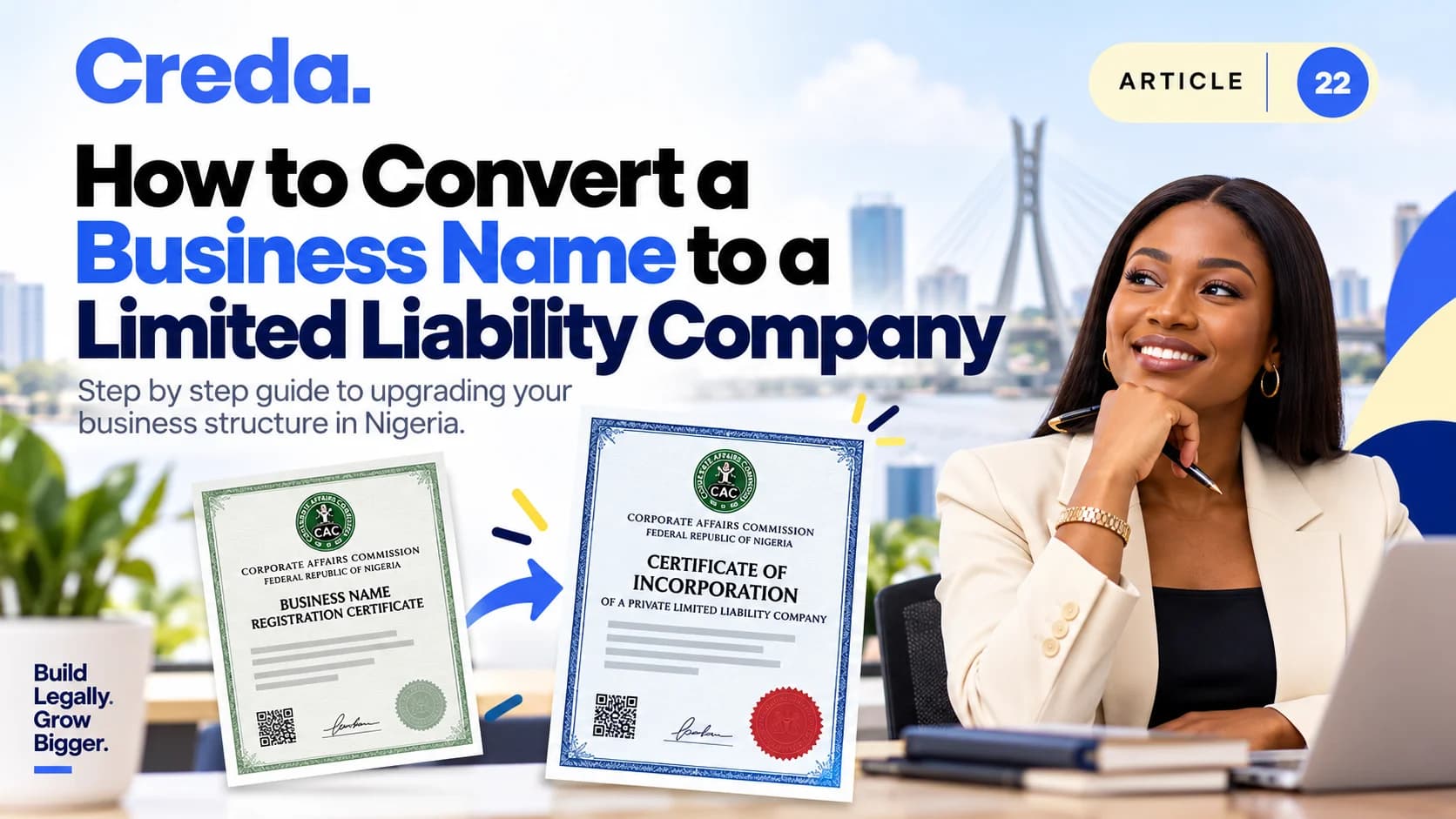
Moving a Nigerian business name into a limited-company structure should not be treated as adding LTD to the existing name. Plan the appropriate CAC incorporation or restructuring route and the transfer of the actual business operations separately.
Start with the reason for the change
An investor, new co-owner, major contract or change in risk may prompt the decision. Write down the outcome you need and check whether a company is the appropriate structure.
Use business name versus limited company to clarify the distinction. If the present problem is simply opening a bank account, first check whether your business name can meet that bank's requirements.
Agree the new company's structure
Decide the shareholders, share allocation, directors, activities and registered-office details before applying. Confirm the proposed name and what CAC requires to use a name related to the existing business.
The exact filing route and supporting consent or records should be confirmed for your situation. This guide does not promise that every business name qualifies for a one-click conversion or automatic retention of its name and number.
Inventory the existing business
List the assets, contracts, bank arrangements, receivables, debts, employees, intellectual property and licences involved. Record who legally owns or owes each item.
A new certificate does not automatically rewrite every contract or move every liability. Ask what transfer, assignment, consent, novation or other action is needed for the actual item.
Plan a controlled changeover
Choose an effective transition plan and responsible person for each workstream. Prepare the correct bank arrangements, invoices, customer notices, supplier records and accounting treatment.
Tell counterparties which entity will perform and invoice the work. Avoid collecting money through an account belonging to one entity while presenting paperwork that identifies another without a clear, lawful arrangement.
Check licences and tax records separately
Ask the relevant authority whether an approval can be amended, transferred or needs a new application. Review tax identification and obligations for the actual taxpayers and transactions.
Do not assume that an old SCUML certificate, product approval or tax record automatically covers the company because its trading name looks similar.
Decide what happens to the business name
It may have outstanding obligations even after the company begins trading. Obtain advice on whether it remains active, changes or follows the applicable cessation process.
Keep a record of the decision and close outstanding operational issues deliberately. Leaving two sets of records without a defined purpose can confuse customers and future advisers.
Frequently asked questions
Will every contract transfer automatically?
Do not assume so. Review the contract and the required counterparty consent or legal process.
Will the company keep the old registration number?
Do not promise that. Confirm the actual registration route and resulting records with CAC.
Should I abandon old compliance once the company is registered?
No. Establish what remains due for the original business and document how it will be addressed.
Review the transition before filing
Ask Creda for a business structure review with the existing records and reason for moving to a company. Obtain licensed legal and tax advice where transfers or liabilities require it.
Sources
Reviewed on 28 October 2026. The filing and transfer steps depend on the actual business.
Join the conversation
Share a brief thought or question about this article.
No comments yet. Be the first to share a thought.
Suggested for you
Company structures
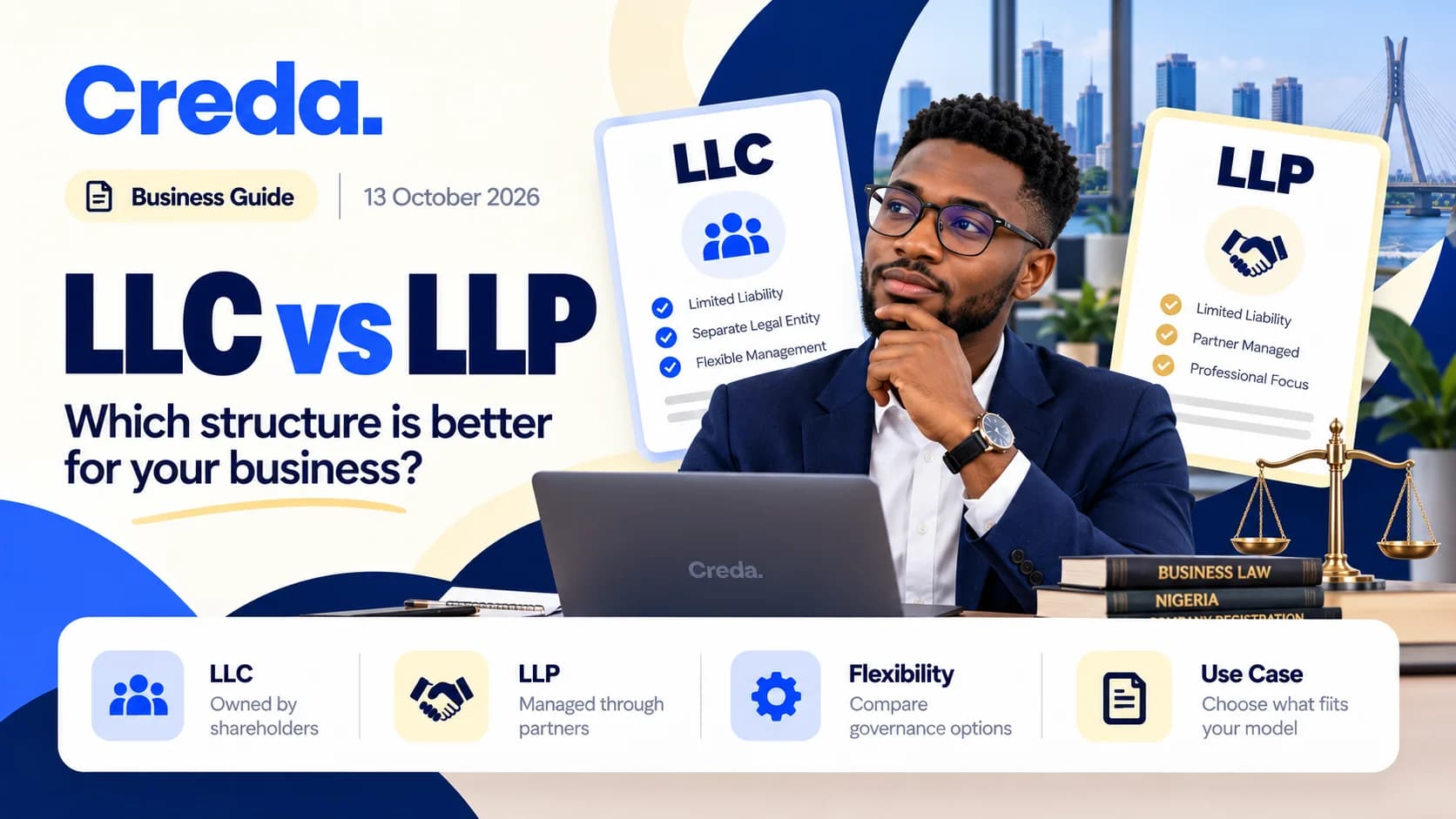
Limited Company vs Limited Liability Partnership
Compare a Nigerian company limited by shares with an LLP: ownership, management, partner requirements and the questions to resolve before choosing a structure.
13 October 2026
Company structures
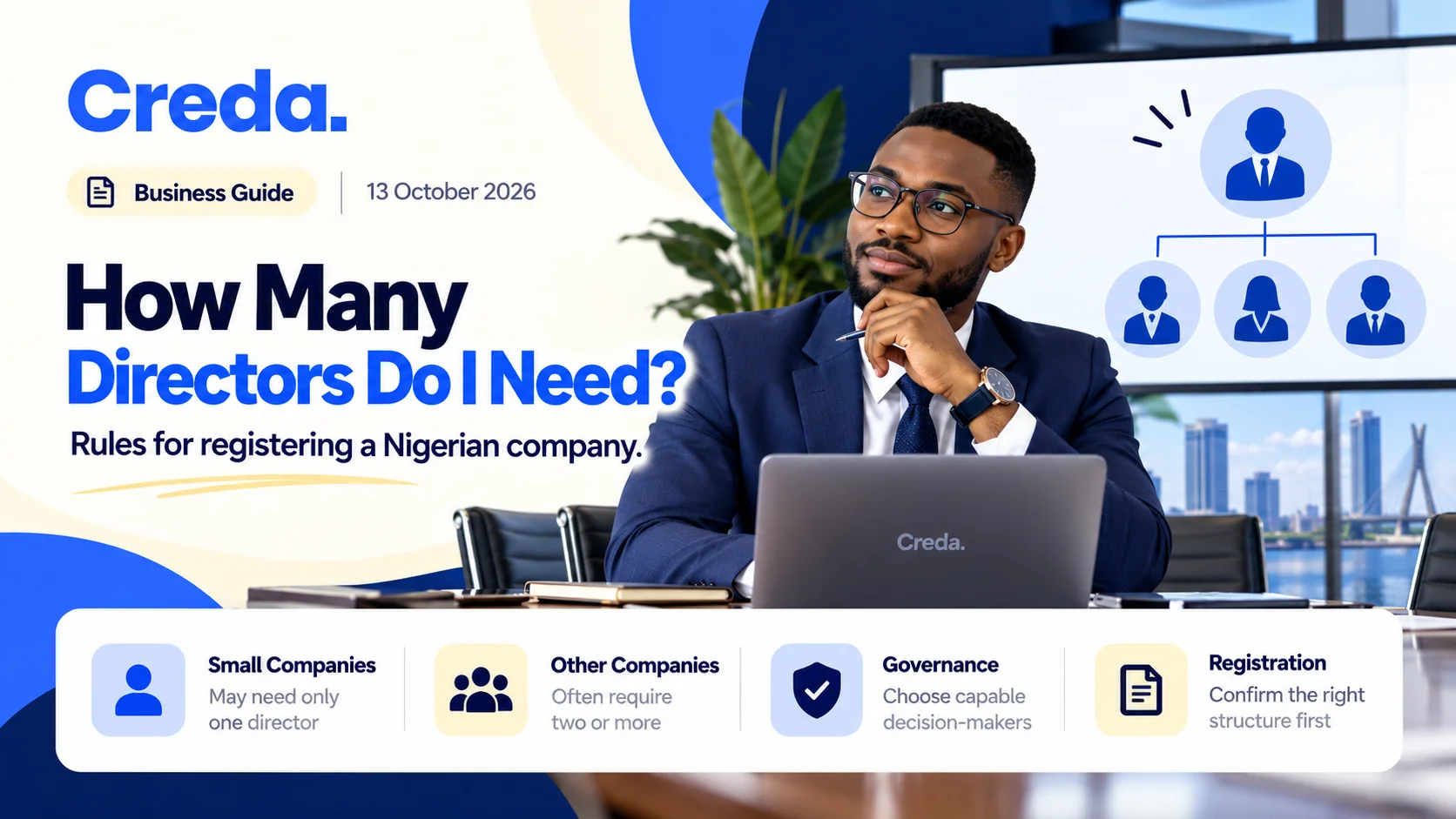
How Many Directors Does a Nigerian Company Need?
A qualifying small company can have one director; other companies generally need at least two. Understand the distinction between a sole shareholder and a sole director before incorporating.
13 October 2026

Company structures
What Is Share Capital in a Nigerian Company?
Understand issued share capital, share allocation and ownership in a Nigerian company, and why the figure is different from cash in the bank or the market value of the business.
13 October 2026