Banking and finance
How to Open a Business Bank Account in Nigeria With a Business Name
Open a business bank account in Nigeria with a registered business name. See the documents to prepare, questions to ask and mistakes that cause delays.
There is a small but important moment when a customer asks, “What name will show when I make the transfer?”
If you have just registered your business, you probably want the answer to be the name you worked hard to choose. You want your invoice, payment details, and customer experience to belong to the same business.
Yes, you can apply for a business bank account in Nigeria using a registered business name. You do not necessarily need a limited liability company. Banks offer accounts for sole proprietors, but the documents, verification, and product conditions differ. Registration starts the application; the bank still has to approve it.
Here is how to prepare without collecting documents for the wrong business structure.
Can a business name open a business bank account?
Yes. For example, Stanbic IBTC's published Biz Smart requirements specifically distinguish business names from limited companies. Its business-name checklist includes a CAC certificate and status report. Access Bank also describes account opening according to the applicant's structure, including sole proprietorships.
Those are examples of banks' own requirements, not a promise that every product has identical conditions. Ask your chosen bank for its current registered sole-proprietorship or business-name checklist.
One practical distinction matters: a business name and a limited company are different structures. Opening an account does not convert one into the other. If you are still deciding which structure fits your plans, read Creda's business name versus limited company guide.
Documents to prepare before you apply
Use the following as a preparation list. The bank's current checklist remains the final guide for its product.
Your CAC registration documents
Have your certificate and the available registration particulars or status report ready. Do not assume that a screenshot of the certificate contains everything the bank needs.
Before submission, compare the registered business name and proprietor details with the information you will enter on the application. If something is wrong, ask how to correct the underlying record. Quietly changing a spelling on the bank form can create a second inconsistency.
The signatories' identification details
Prepare valid identification and the identity-verification details requested for each signatory. Stanbic's published checklist includes signatory identification and BVN, alongside photographs and a completed application form.
Ask which identification documents the bank accepts and whether it needs additional NIN verification. Submit sensitive identity details through the bank's approved channels.
Evidence of address
Ask what the bank accepts for your business and residential addresses. Stanbic's checklist specifies a recent utility bill, no older than three months.
If you work from home, share an office or use premises where bills are in someone else's name, explain that before applying. Ask what supporting evidence is acceptable instead of waiting for a rejection to discover the rule.
Tax identification details
Have the tax identification information requested by the bank ready. Some bank checklists still label this field "TIN." Confirm the current identifier and evidence the bank accepts rather than relying on an old screenshot or buying a second number unnecessarily.
Additional product or sector documents
The bank may ask for references, mandates, additional verification, or documents linked to your activity. A limited company's checklist can also contain documents that do not belong to a sole-proprietorship application.
If a bank requests SCUML, ask how your declared business activity falls within the relevant requirements. Do not assume every business needs it. Have the bank clarify the requirement before arranging any additional compliance work.
Five questions to ask the bank first
Send a short message or take this list to the branch:
Is this account available to a registered sole proprietor?
What exact business name will customers see when paying me?
Which documents and verification steps apply to my business activity?
What opening balance, ongoing charges, and transaction conditions apply?
Can I manage the account online, and which payment features need a separate application?
Keep the answers with your application checklist. A product advertised as an SME account may have conditions that do not suit the way you collect money.
Why applications can get held up
Check these points before resubmitting an application:
The business name on the form differs from the CAC documents.
The proprietor's identification and registration details do not agree.
A required document is missing or unreadable.
Address evidence falls outside the bank's accepted conditions.
The activity described on the application needs clarification or supporting documents.
Ask the bank to identify the outstanding item clearly. “Your application is incomplete” is difficult to act on; “we need an accepted document for this address” gives you a useful next step.
Do not keep creating fresh applications to solve a document problem. First understand what needs correcting.
Put the account to work once it is approved.
Update your invoices and payment instructions carefully. Let existing customers know which details to use, and check that incoming payments are being recorded against the right orders.
Keep a simple routine: record sales, retain receipts, and reconcile transactions. Decide how you will record money introduced by the owner and money taken out for personal use. A dedicated account gives you a clearer starting point, but it cannot organize records you never keep.
Creda's guide to what comes after CAC registration covers the wider preparation, including compliance and document storage.
Frequently asked questions
Must I register a limited company before opening a business account?
Not necessarily. Banks offer accounts for registered sole proprietors. Confirm that the particular product accepts your structure and activity.
Is my CAC certificate enough on its own?
Do not assume so. The bank may also require registration particulars, identification, tax details, address evidence, and other product-specific documents.
Will registration guarantee that the bank opens my account?
No. The bank must complete its application and verification process. Creda cannot promise approval on its behalf.
Will a business account automatically qualify me for a loan?
No. An account is not a lending approval. Any credit application has its own eligibility, assessment, and terms.
Make your next application a prepared one.
You should not have to feel embarrassed about asking a bank what a document means. The useful next step is to get a clear checklist and work through it.
If you need help organizing your business documents and understanding the next steps, speak with Creda about business support.
Sources
Bank requirements and products can change. Check the bank's current conditions before applying.
Join the conversation
Share a brief thought or question about this article.
No comments yet. Be the first to share a thought.
Suggested for you
Banking and finance
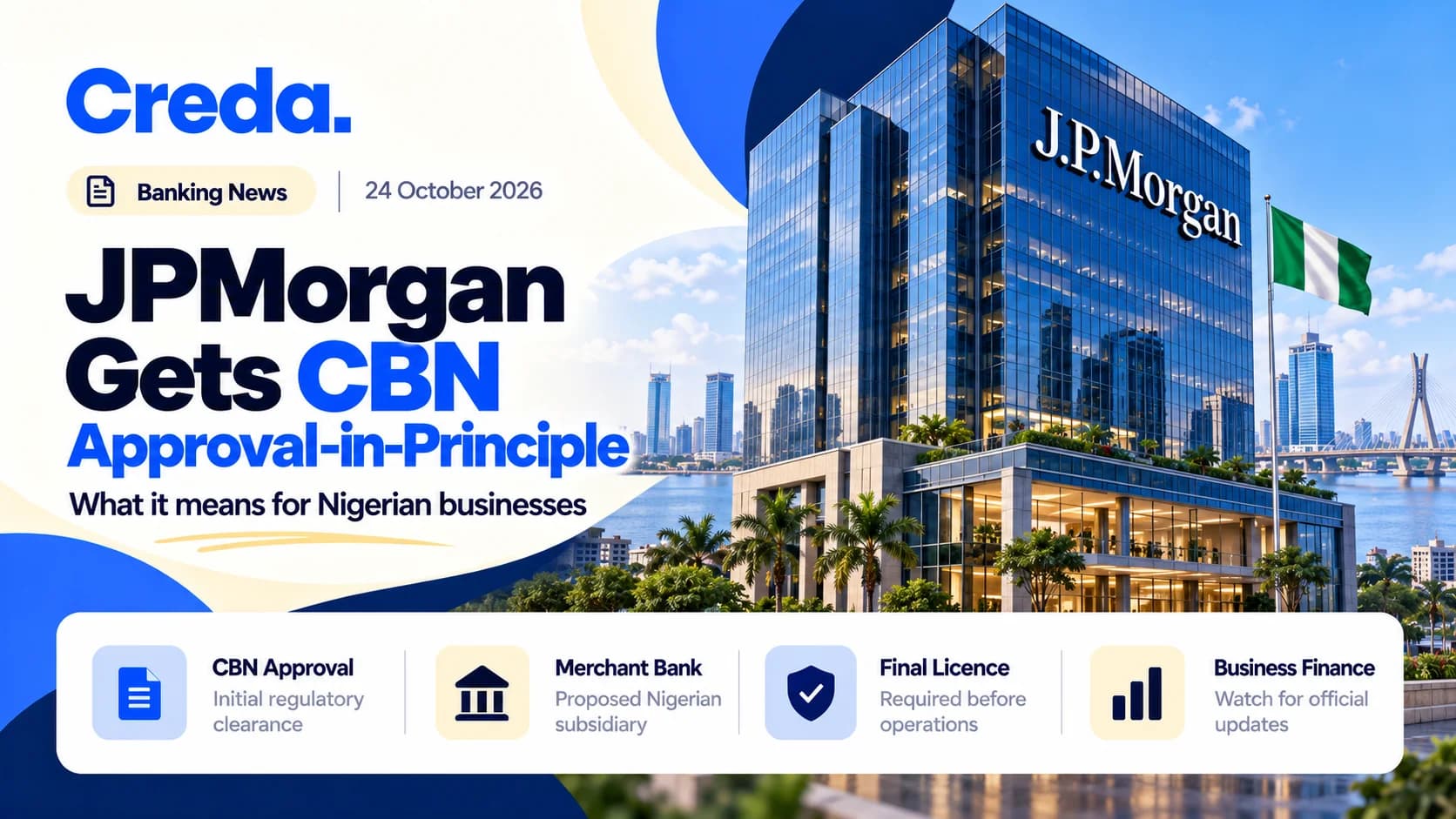
CBN Grants JPMorgan Approval-in-Principle for Merchant Bank in Nigeria
JPMorgan received approval-in-principle for a Nigerian merchant bank in October 2026. Understand what that stage means and why it is different from a final licence or SME funding offer.
24 October 2026

Banking and finance
Mastercard Calls for Faster, Safer Fintech Growth in Nigeria
Mastercard’s fintech message links growth with trust and useful digital records. Here is what Nigerian SMEs can take from the dated report without treating technology adoption as a loan guarantee.
12 October 2026
Business registration
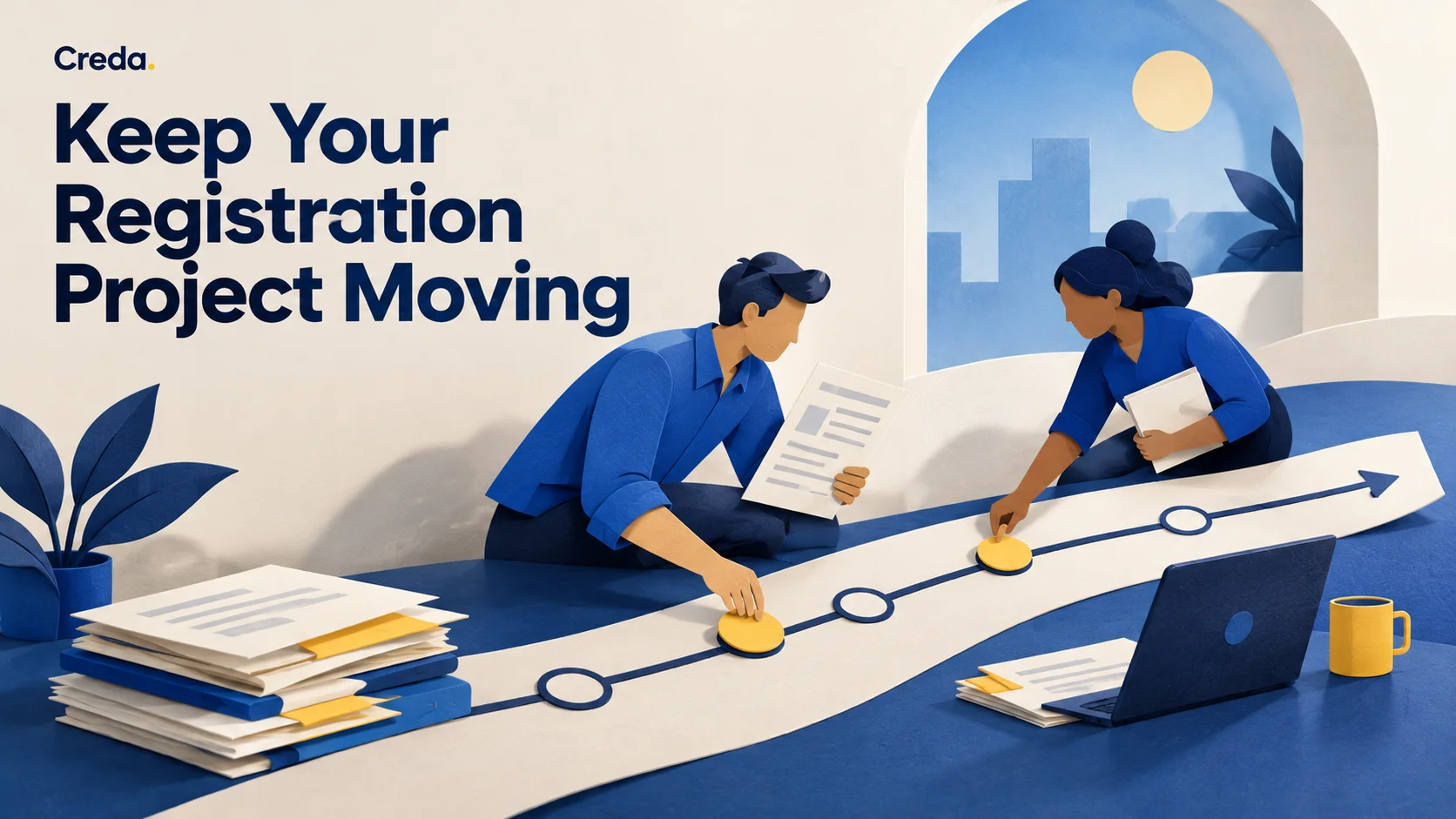
How to Keep a Business Registration Project Moving With Two Founders
Agree how the founders will resolve decisions and provide documents. A single timeline helps prevent the application from waiting indefinitely between separate conversations.
9 November 2026