
Business registration
What to Do After CAC Registration in Nigeria: 7 Important Next Steps
After your CAC certificate arrives, organise seven next steps covering records, Tax ID, banking, filings, sector requirements, bookkeeping and a workable compliance calendar.
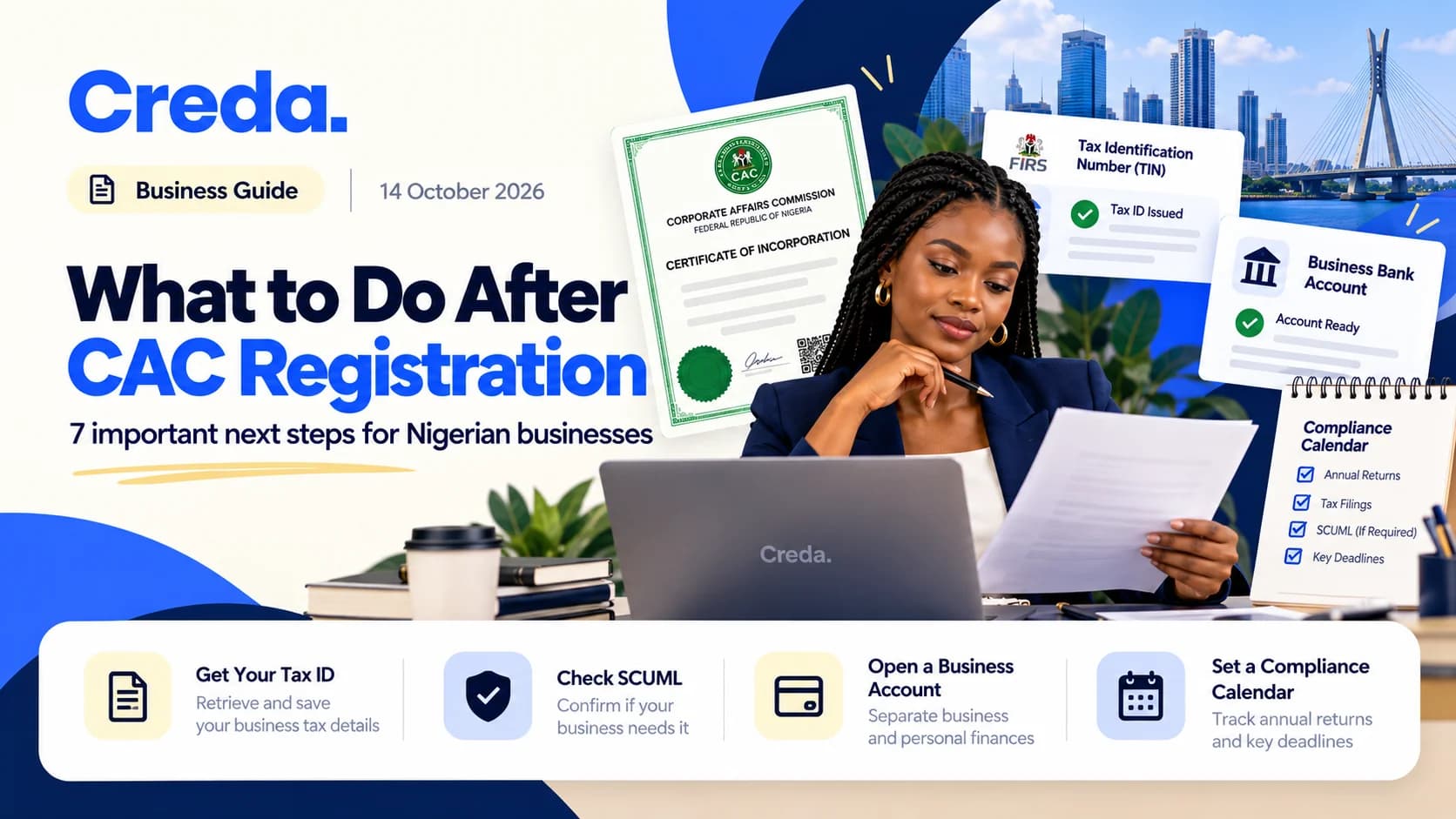
After CAC registration, check the issued records, organise tax identification and banking, establish the applicable filings and licences, and begin proper bookkeeping. Registration creates a foundation; it does not automatically complete every obligation of the business.
1. Check and store your registration records
Review the registered name, number, structure and recorded particulars. Keep the certificate and status information in a secure folder with controlled access and a backup.
Do not let a spelling error spread into bank records, contracts and invoices. If something is wrong, ask about the appropriate correction before using the record widely.
2. Retrieve and verify the Tax ID
Use the official NRS/JRB service and the correct taxpayer category. Compare the resulting record with the entity's details. Tax identification is separate from returns, payments and tax clearance.
Our Tax ID retrieval guide explains the practical route and what to do when records do not match.
3. Prepare a dedicated business bank account
Ask your chosen bank for its current checklist for your legal structure and activity. Registration documents are part of the preparation, while identification, address, tax and other checks may also be required.
A business name does not necessarily need to become a company merely to apply for an account. See opening a business bank account with a business name.
Once operating, keep business transactions identifiable and reconcile the statements with the books.
4. Establish your CAC filing obligations
Find out which annual-return and change-notification rules apply to your entity. Do not copy a company's filing calendar onto a business name or assume incorporation-anniversary advice applies universally.
For a registered business name, use the dedicated annual returns and filing checklist. Keep the filing acknowledgement and record the period covered.
5. Check sector and activity requirements
Review whether the actual activity needs another licence, product registration or designated-sector compliance. CAC registration, NAFDAC product approval and SCUML registration answer different questions.
Start with whether your business needs SCUML, and review the NAFDAC preparation guide where food or cosmetics are involved. Avoid applying a generic checklist to unrelated industries.
6. Begin bookkeeping and contract discipline
Record sales, expenses, invoices, receipts, debts and owner contributions from the beginning. Keep a clear distinction between revenue, borrowing and money introduced by the owner.
Use the correct legal party on contracts and invoices. If several people own the business, retain the agreed ownership and decision-making records alongside the registration documents.
A workable system that is maintained each week is more useful than an elaborate spreadsheet nobody updates.
7. Create a compliance calendar
For each obligation, record the entity, period, due date, responsible person, preparation date and evidence of completion. Include applicable tax filings, CAC returns and licence renewals, with their own rules.
Review the calendar when activities, ownership or premises change. Add reminders early enough to collect documents and correct missing records.
Frequently asked questions
Does my certificate prove that all compliance is complete?
No. It proves a registration outcome, while other obligations require separate evidence.
Should I apply for every certificate I hear about?
First establish applicability. Unnecessary applications consume time and do not replace the obligations that actually matter.
What should I prioritise if a bank is waiting?
Obtain that bank's current checklist, compare it with the records you have and resolve the specific missing items. Avoid assuming one institution's requirements apply everywhere.
Turn the certificate into a working system
Ask Creda for business support and advisory with your entity type, activities and current documents. Start with a dated list of what is complete, outstanding and due next.
Sources
Reviewed on 28 October 2026. Apply each obligation to the actual entity and activity.
Join the conversation
Share a brief thought or question about this article.
No comments yet. Be the first to share a thought.
Suggested for you

Business registration
How to Keep a Business Registration Project Moving With Two Founders
Agree how the founders will resolve decisions and provide documents. A single timeline helps prevent the application from waiting indefinitely between separate conversations.
9 November 2026
Business registration
How to Handle a CAC Query Without Losing the Original Instruction
To handle a CAC query, preserve the original filing instruction, record the exact requested change, submit one controlled correction, and compare the final preview with the original before resubmitting.
9 November 2026
Business registration
What Happens If My CAC Name Reservation Expires?
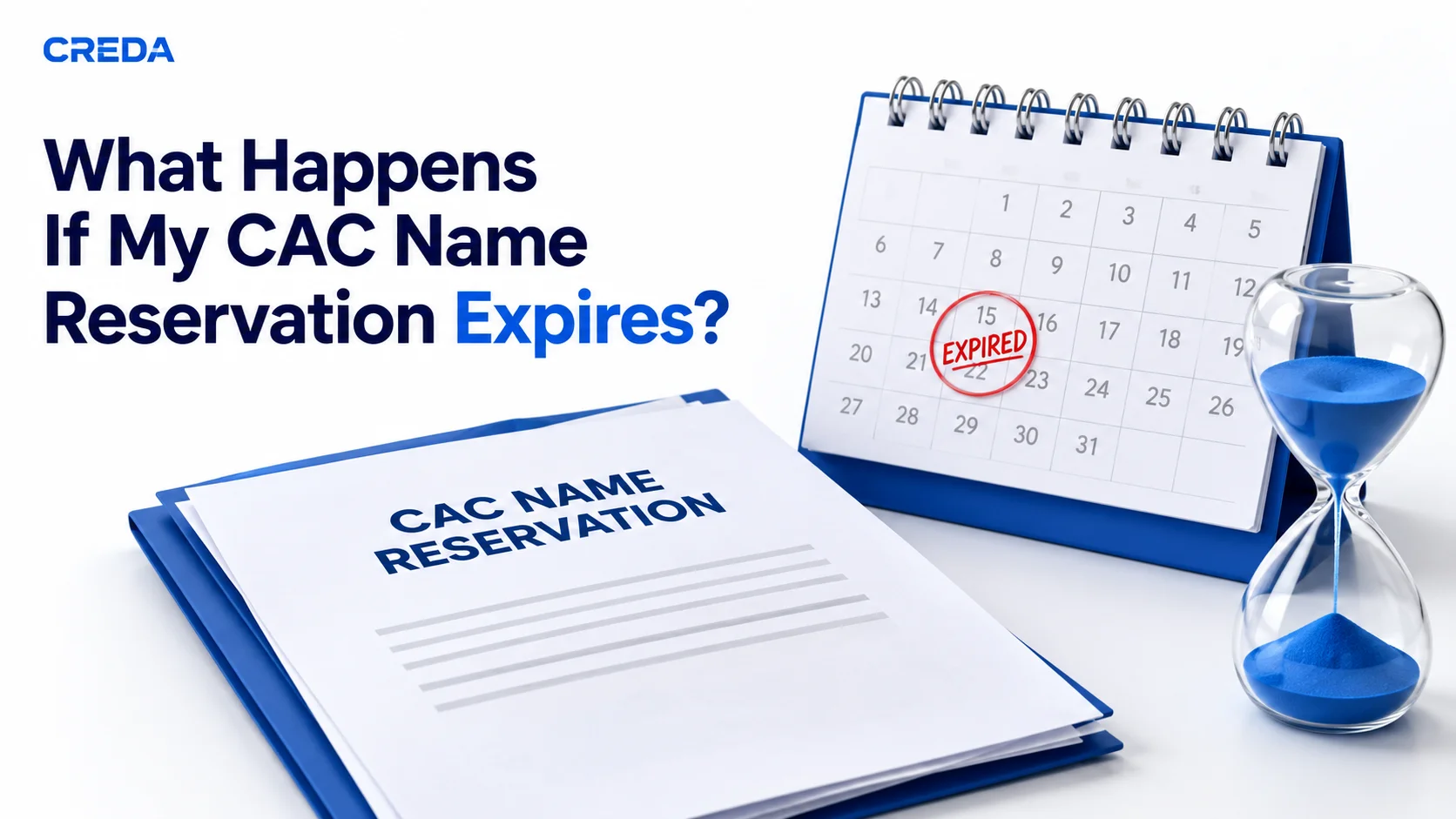
An expired reservation should not be treated as a live entitlement to register that name. Check its current status and the available official route. Availability may change, so do not assume you can simply reuse an old approval code.
9 November 2026